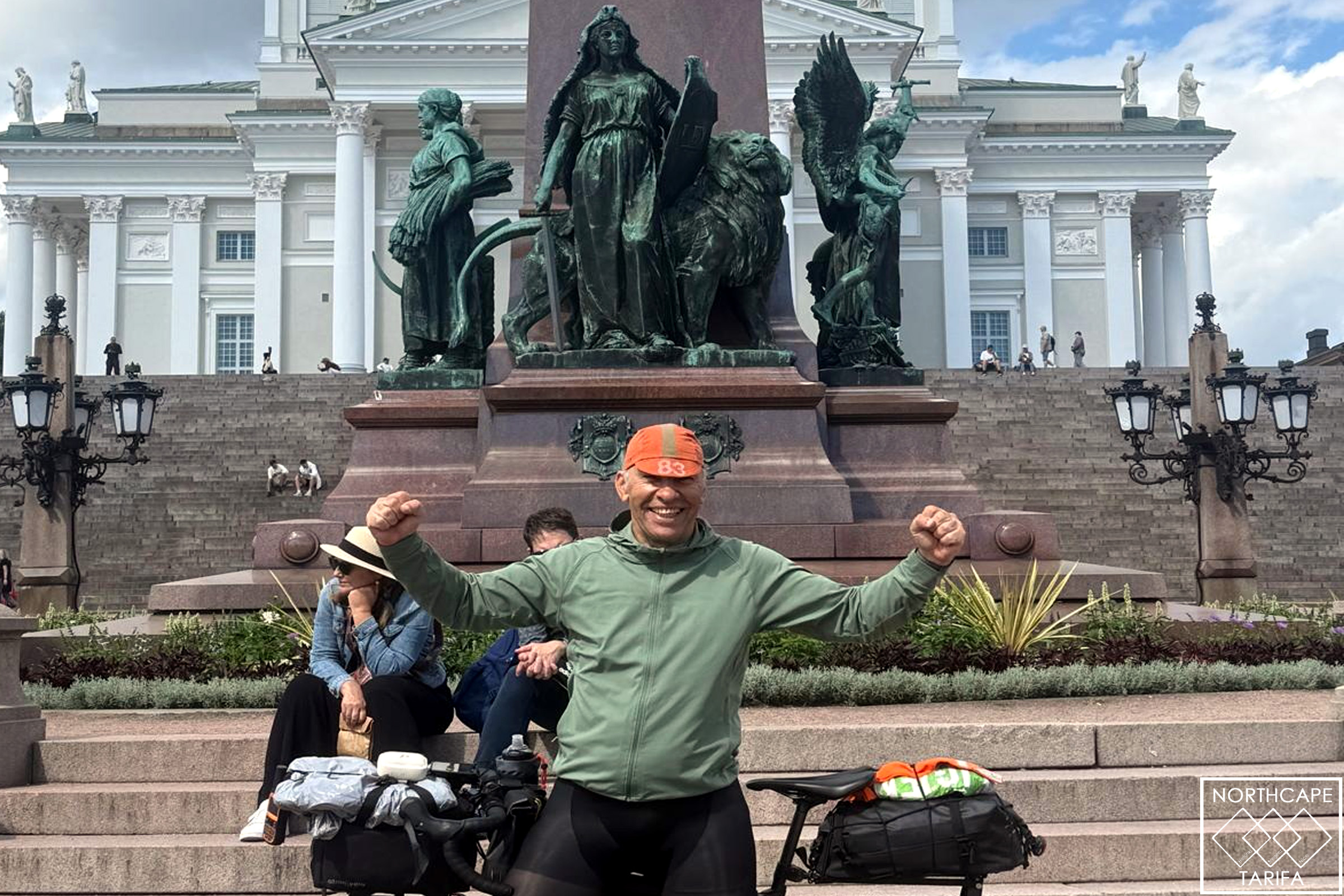
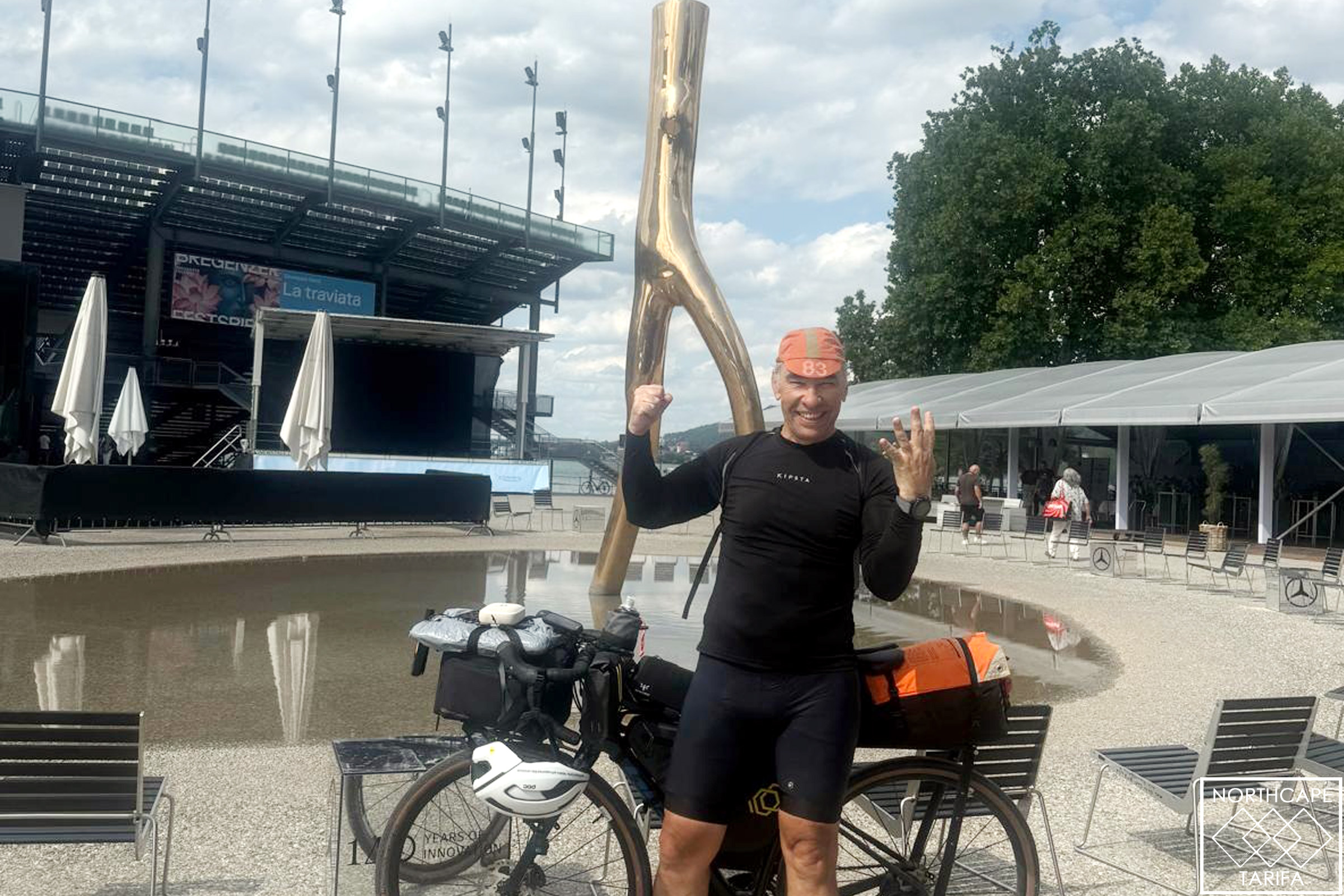
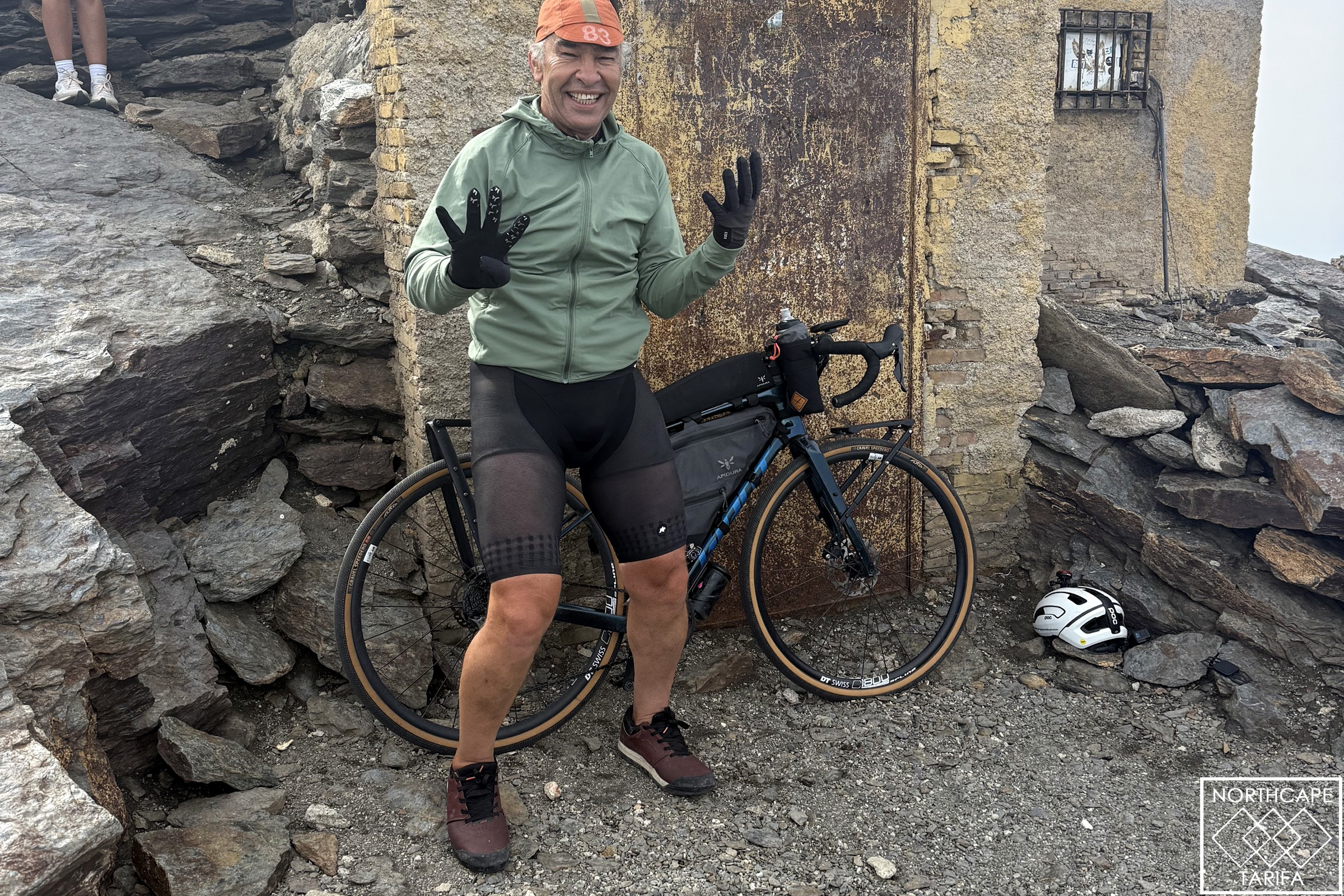
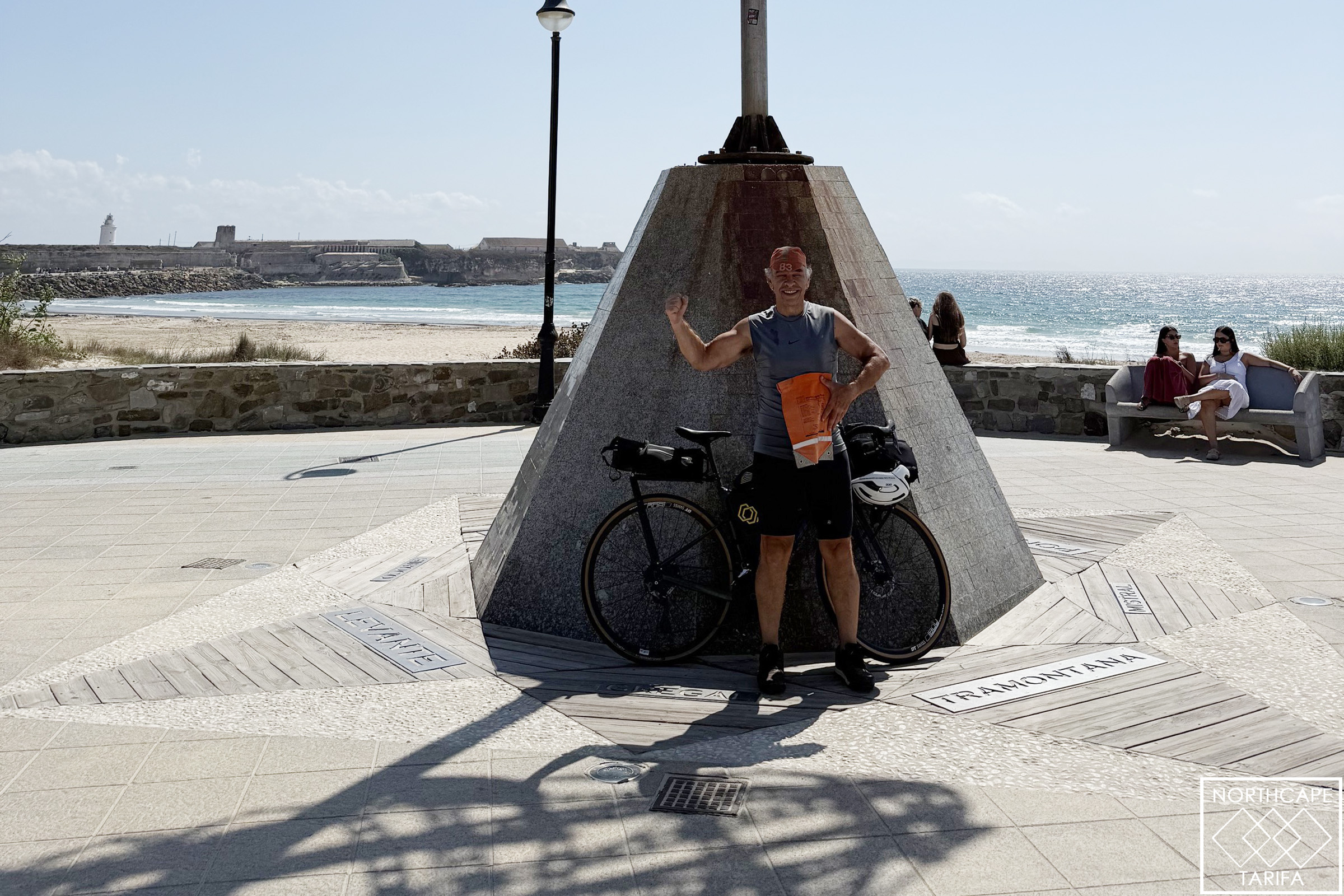
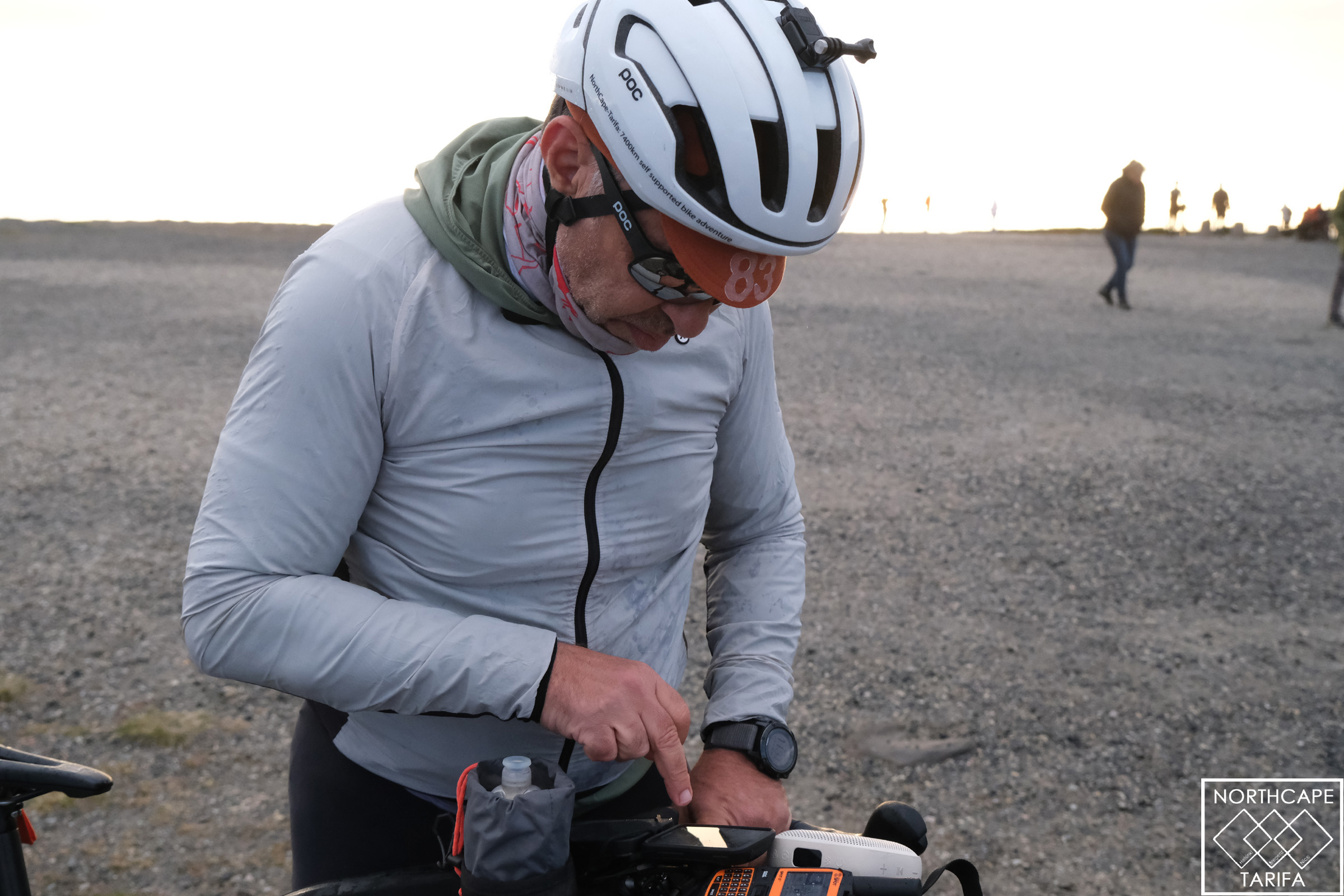
After 61 days, 16 hours and 30 minutes on the road, the final rider of the 2026 NorthCape-Tarifa has reached the finish in Tarifa.
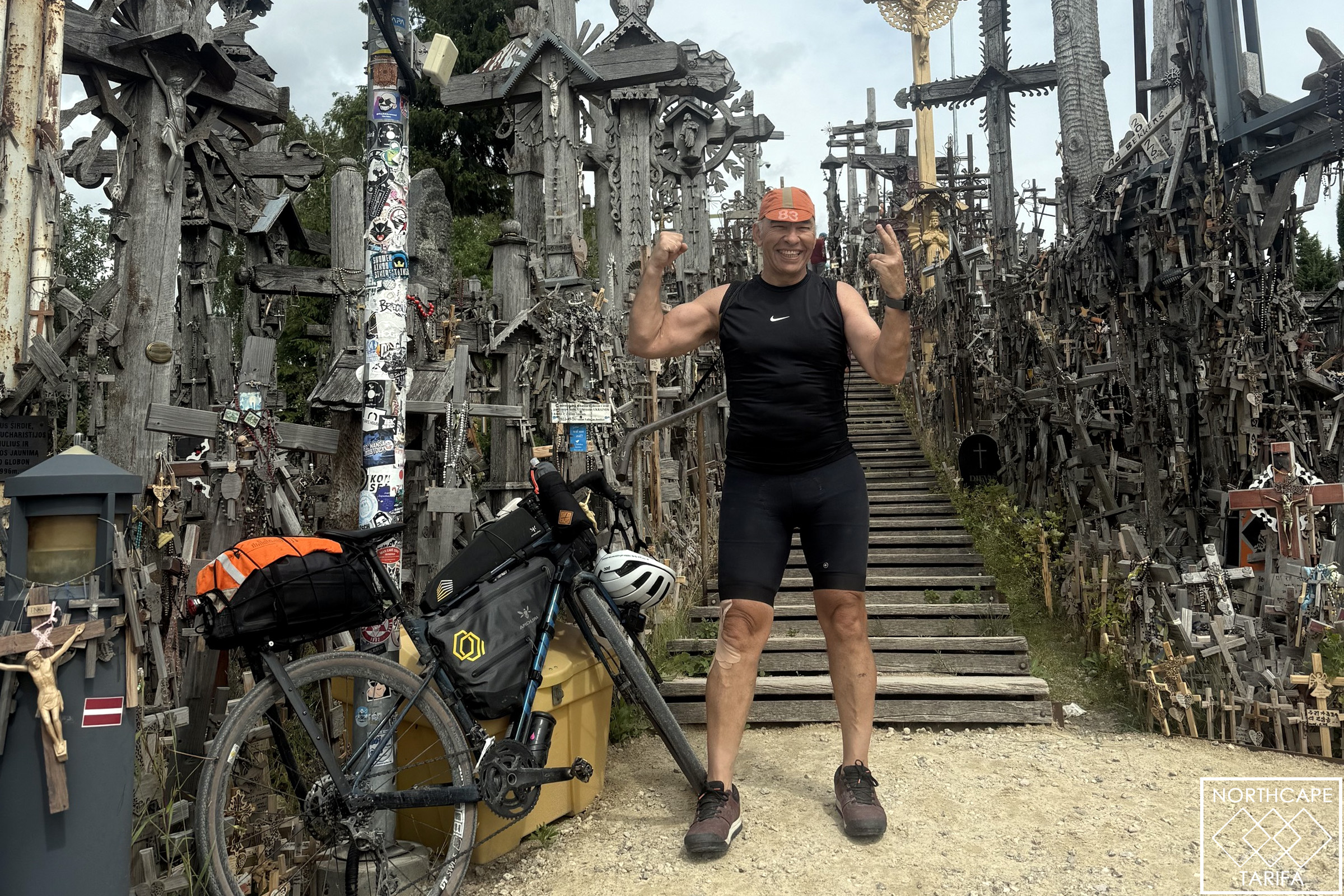
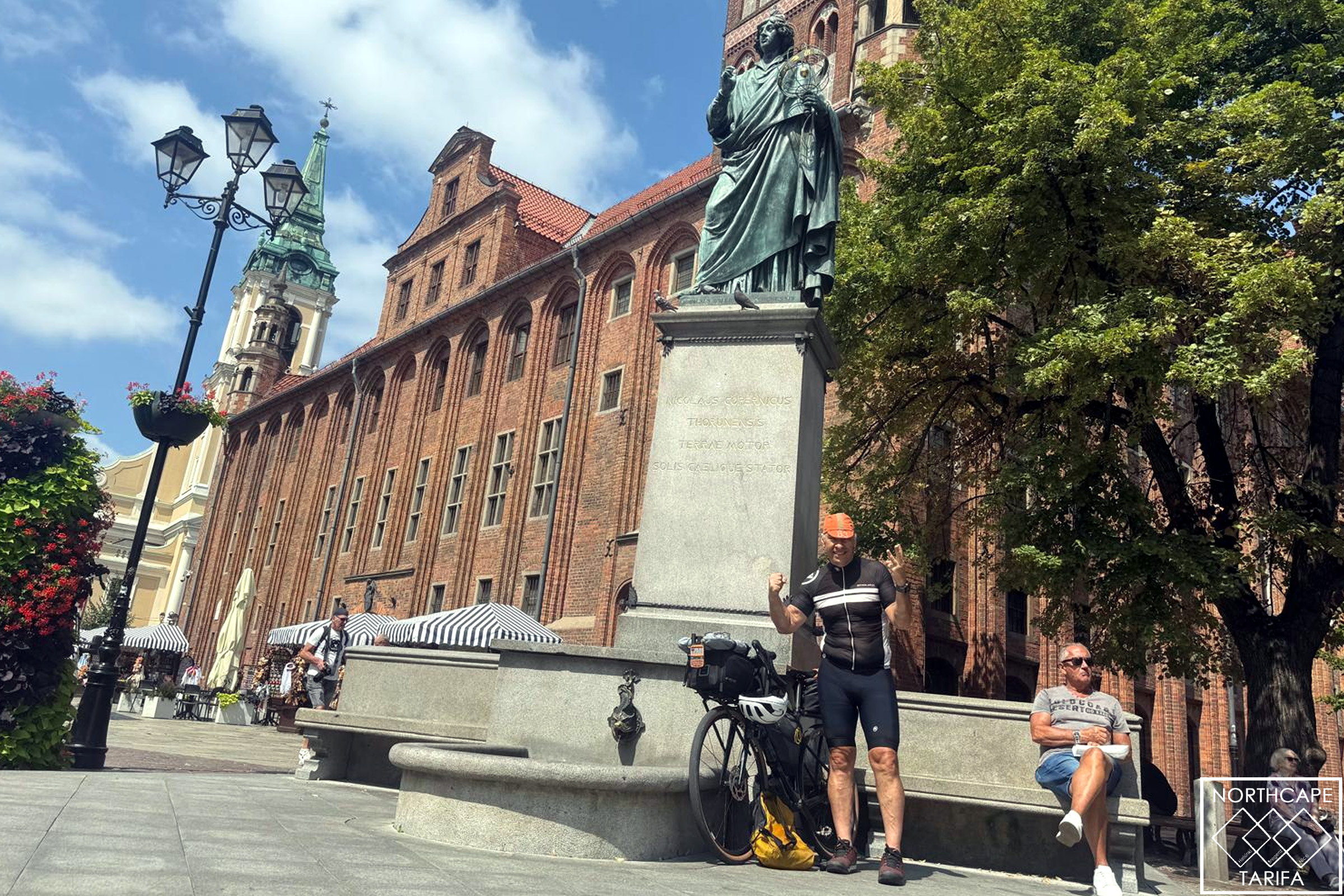
Cap 83 – Rui Faria crossed the finish line on 20 August 2026 at 16:30, completing one of Europe’s longest and toughest unsupported bikepacking adventures.
Born 1965, Rui brought with him around 15 years of cycling experience and a collection of bikepacking adventures through Japan, Iceland, Mallorca, Argentina and the Azores.
And with his finish, Rui also made history: he is the first Portuguese rider to complete the NorthCape-Tarifa.
But NorthCape-Tarifa is a different level of challenge.
For more than two months, Rui travelled south from the North Cape, facing thousands of kilometres, mountains, heat, fatigue, changing conditions and everything else the road had in store. He never gave up.
As the final rider on the course, Rui carried the traditional title of the Lantern Rouge – the rider bringing up the rear of the field.
But there is nothing “behind” about what Rui achieved.
He started at the North Cape. He crossed Europe. And he made it all the way to Tarifa.
And for Rui, even Tarifa was not quite the end.
His plan after completing the NorthCape-Tarifa was to continue west across the Iberian Peninsula to Sagres, Portugal, turning his finish into an even bigger Epic Plus adventure.
The last rider to arrive is still a NorthCape-Tarifa finisher — and sometimes the Lantern Rouge is simply the rider who keeps going when everyone else has already stopped.
The organization of NorthCape–Tarifa has decided to disqualify rider CAP 62 from the event with immediate effect.
The decision follows several repeated violations of the event rules, including failure to comply with mandatory tracking requirements, failure to submit mandatory checkpoint photos, repeated loss of tracking, and unsafe riding behaviour on public roads.
All riders were informed during the Rider Briefing and again by email on 24 June 2026 that local traffic laws must be respected at all times and that riders must keep to the right-hand side of the road where applicable. These requirements are fundamental safety rules of the event.
NorthCape–Tarifa is a self-supported ultra-distance cycling event conducted entirely on public roads. Respect for local laws and consideration for other road users are essential to ensure the safety of all participants and to protect the future of the event.
The decision to disqualify the rider was therefore necessary and has taken effect immediately.
We thank all participants for continuing to ride responsibly and for respecting both the event rules and the laws of every country along the route.
cap 3, on the JA-7201 in southern Spain, drives in the middle of the winding road.
Ralph “Dizzy” Diseviscourt reached Tarifa as the 3rd finisher of the 2026 NorthCape-Tarifa, completing the 7,400 km route in 21 days, 23 hours and 51 minutes.
🚴 7,400 km from North Cape to Tarifa ⏱️ 21 days, 23 hours, 51 minutes
With a moving speed of 20.19 km/h, he recorded the second-fastest moving speed of this year’s race. His Garmin showed more than 7,500 km at the finish. In reality, every small detour adds up – missed turns, riding into town for shopping, finding accommodation, or simply taking the wrong road all count towards the final distance.
Was Dizzy looking for even more adventure?
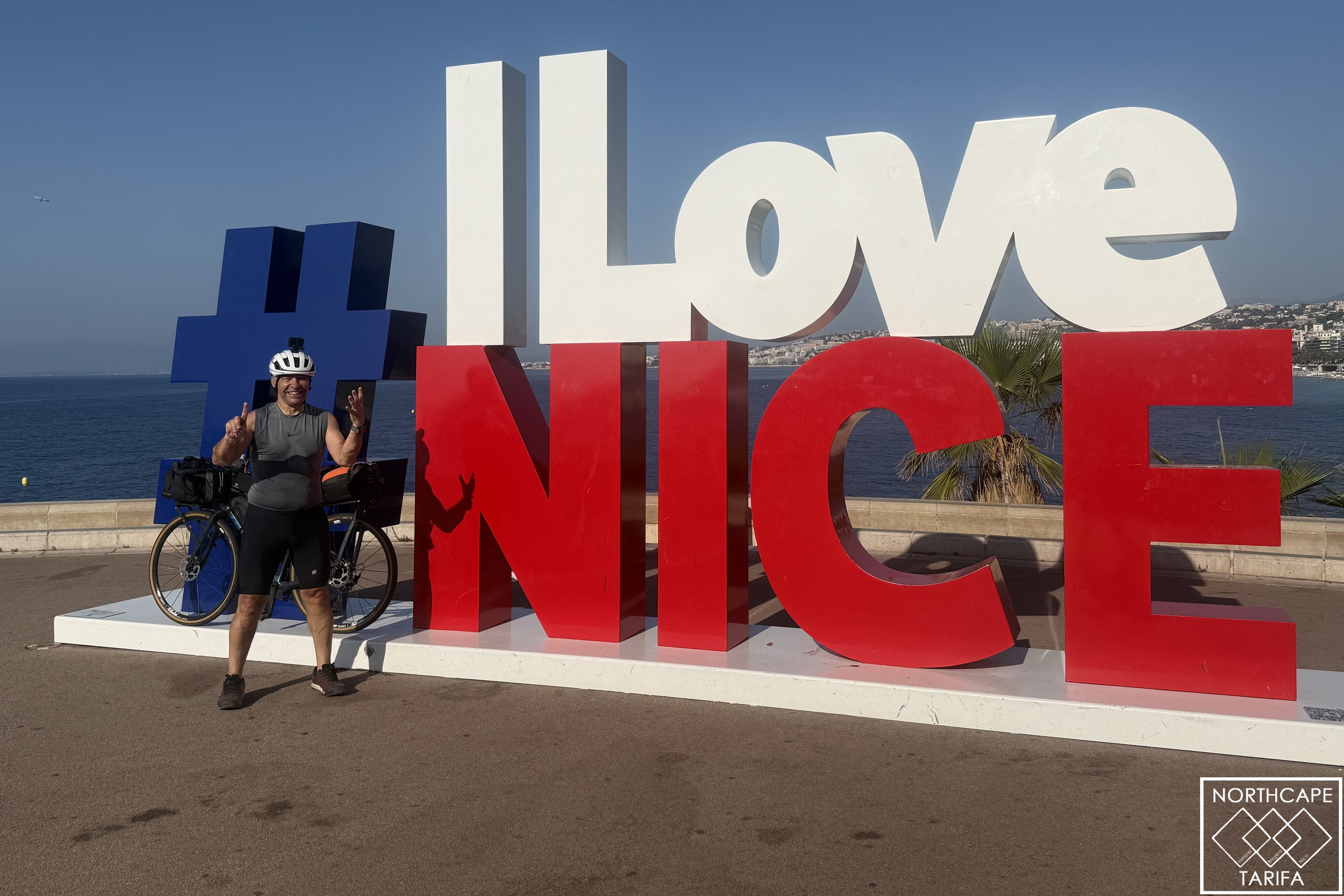
Apparently, the climbing on the official route wasn’t enough. Ralph tackled the optional Mescla Tunnel detour near Nice – adding around 12 extra kilometres and almost 1000 metres of climbing. The reward? Spectacular scenery and beautiful mountain villages. The downside? If you’re racing for a top result, every extra kilometre matters.
Only at the finish did we learn that the detour wasn’t intentional. Most likely, the wrong GPX track had been loaded, sending him up the mountains behind Cannes and Nice instead of staying on the official route.
A Record Pace to Tarifa
After wrestling with the monster climb to Pico del Veleta, Ralph took a well-earned rest in Granada. From there, he launched an incredible final push.
He set one of the fastest Granada–Tarifa time ever recorded on NorthCape-Tarifa, covering the demanding 336 km in just 21 hours and 52 minutes.
That works out to an average speed of only 15.6 km/h. Only? Anyone who has ridden those endless steep ramps through Andalucía knows exactly why that number is seriously impressive. It is one of the toughest sections of the entire route, and there is simply no easy kilometre left.
Flats, Tubes and Camping
Unlike Florian and Jens, Dizzy had to battle numerous punctures throughout the race.
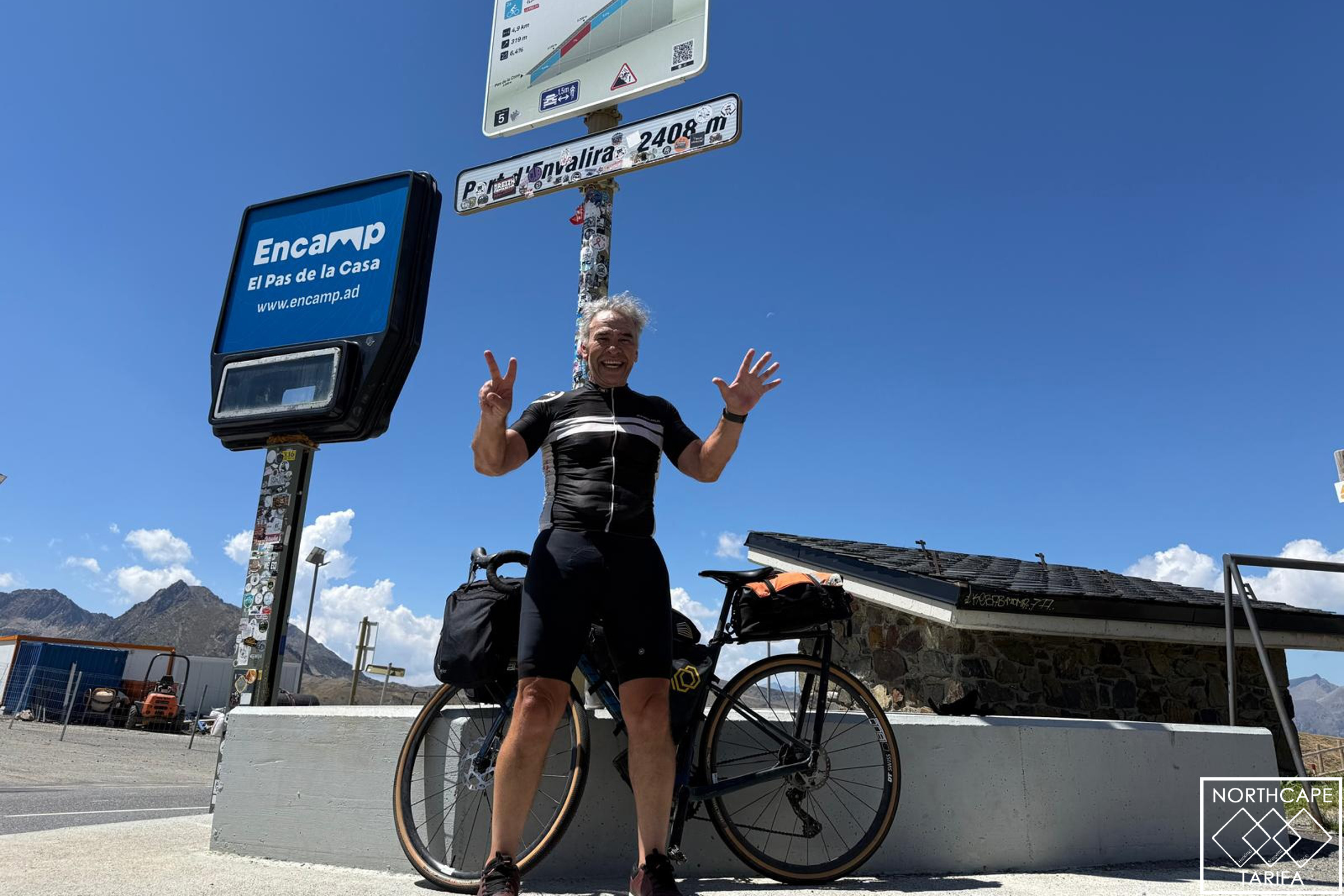
Fortunately, the route passes through Andorra, home to many professional cyclists and a paradise for bike equipment. Dizzy left with six brand-new Tubolito inner tubes.
Despite using ultralight tubes, Ralph’s bike setup was noticeably heavier than those of Florian and Jens. He also carried a tent – and actually used it during the race.
“Has Anyone Done This Race Twice?”
Remarkably, NorthCape-Tarifa 2026 was Ralph’s first self-supported ultra-distance race. At the finish he asked: “Has anyone done this race more than once?” A little later, he posted: “3rd finisher this year.” Is he trying to tell us something?
Racing Hard, Enjoying the Adventure
Before the start, Ralph described his goal perfectly: “Race pace, but safety first, looking for fun and adventure.”
With the obligatory finish selfie from the final checkpoint in Tarifa, he added these words:
“Thanks for everything Andy, I am sure NCT is going to be one of the most iconic ultra adventures out there. For me, it is already the case! Not sure anything can top this race!”
Comments like these make all the work behind NorthCape-Tarifa worthwhile.
Congratulations, Dizzy! It was a pleasure to have you on this adventure.
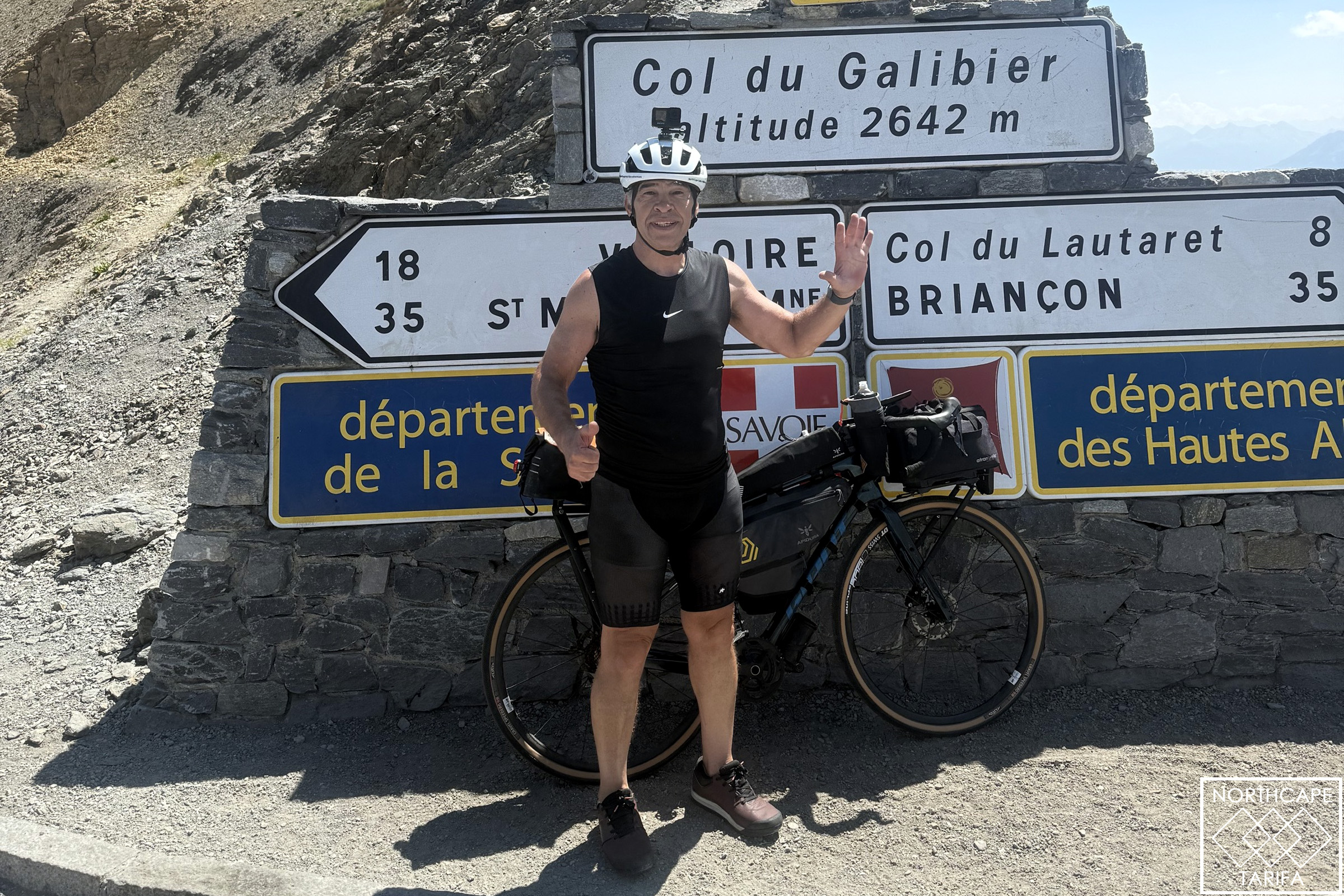
And hopefully we’ll meet again on one of those legendary monster climbs – perhaps Col du Galibier, one of the Tour de France’s famous Hors Catégorie (HC) climbs.
See you there, with the same big smile.
Ralph “Dizzy” Diseviscourt Palmarès
3rd NorthCape-Tarifa (2026) – Fastest time Granada to Tarifa
2x RAAM Finisher
3x Tortour winner
3x Race Across Italy winner
2x Race Across France 2600 winner
Winner Race Across Belgium, Glocknerman, Dolomitica, Dolomitics24, Tour des Stations Ultimate 1000
Podiums in Race Around Austria, Race Around Slovenia, Race Across the Alps
Our second rider has reached Tarifa after 20 days, 19 hours and 35 minutes- Jens Volkersdorfer (Cap 55) crossed the finish line, completing an outstanding 7,400 km ride from North Cape to the southernmost point of continental Europe.
🚴 7,400 km from North Cape to Tarifa ⏱️ 20 days, 19 hours, 35 minutes
Jens came to the start with a clear goal: “Finish as fast as possible and enjoy the variety of the landscape on this beautiful parcours :)” and to finish in 20 days. He certainly achieved both. While reaching his goals, he delivered one of the strongest rides of this year’s event.
Jens rode with incredible consistency throughout the race. Sleeping around five hours every night, he maintained an impressive 22.4 km/h average moving speed – the highest of all participants. For comparison, winner Florian averaged 19.92 km/h. Whenever Jens was moving, he was absolutely flying.
One of the standout moments of his ride came on Pico del Veleta. Jens climbed the entire 40-kilometre ascent with 2,600 metres of elevation gain to 3,400 metres in one continuous effort, without stopping until he was just about 5 metres below the summit. A truly impressive climb.
Like every ultra-distance adventure, his race also included a few unexpected moments. Near Riga, Jens was involved in an accident on a roundabout, costing him more than five hours while finding a replacement front wheel. Thankfully, he escaped without injury and was able to continue. Then, on the very last day, the second pair of bib shorts he had hanging from his saddlebag to dry became caught in the chain. The only solution? Cut them free and keep riding to Tarifa.
At the finish, Jens summed up his adventure with a smile:
“Vielen Dank für alles! Es war mir ein Fest!” (“Thank you for everything! It was a real joy!”)
He told us he was completely blown away by the route and the incredible variety of landscapes along the way.
Huge congratulations, Jens! What an incredible ride from start to finish. You set the fastest moving speed of the race, overcame every obstacle that came your way, and earned a well-deserved second place in Tarifa. It was a pleasure to follow your journey across Europe. Well played!
Jens is no stranger to the front of the ultra-cycling field. His palmarès already includes:
1st Finisher – NorthCape4000 (2023)
5th – Race Around Belgium (2023)
6th – Transpyrenees (2023)
1st – Race Across Italy Unlimited (2024)
2nd – Race Around Denmark (2025)
2nd – Race Around Poland (2025)
2nd – NorthCape-Tarifa (2026) – highest average moving speed
Florian Moreau cap 66 is the first finisher of the 2026 NorthCape–Tarifa and sets a new course record!
Many people doubted he would make it across the Alps on a TT bike. Florian proved them wrong.
🚴 7,400 km from North Cape to Tarifa ⏱️ 20 days, 9 hours, 40 minutes
Florian enjoyed exceptionally good weather, encountering only a few short rain showers during the entire ride. Watching the wind forecasts closely, he noticed that the Baltic winds would soon change from a favourable northerly to a headwind from the south. He accelerated his pace to catch the Helsinki–Tallinn ferry on 23 June, reaching it on Day 3.
That meant covering an incredible 1,753 km in just 84 hours and 49 minutes – only 3½ days.
His speed continued throughout the route. Florian recorded the fastest time on 5 of the 9 official segments.
With a finishing time of 20 days, 9 hours, and 40 minutes, Florian also sets a new fastest time for the NorthCape–Tarifa route. While direct comparisons across the years are never perfect – as parts of the route and road surfaces have evolved since the inaugural 2018 edition – his performance was truly outstanding. He improves the previous best, set by Steffen Streich in 2018, by an impressive 15 hours and 17 minutes.
Mission: Arctic to the Tropic
Tarifa is not the end of Florian’s adventure. His journey continues to Dakhla, Morocco, taking his ride from the Arctic all the way to the tropics.
You can continue following Florian’s African adventure on the live tracker.
Congratulations, Florian!
Have a safe journey to Dakhla!
Florian’s Palmarès
2ndRace Across France 2500 km (2022)
6th Transcontinental Race (2023)
2nd BikingMan Taiwan (2024)
3rd Desertus Bikus (2024)
9th Transcontinental Race (2024)
1st TransatlanticWay – 1,700 km (2025)
3rd Desertus Bikus (2025)
Finisher, Transcontinental Race (2025)
Tour of Europe (three ultra races linked together)
One year ago, we received the heartbreaking news of Christine’s death during the Kraków–Tarifa, the 45SouthWest.
On the afternoon of 2 July, she left the official route during the climb to Pico Veleta. She was found a few hours later, around 200 metres off the route on a small road. The circumstances of her death were never officially confirmed. It was a period of extreme heat across France and Spain, and she had started the 40 km climb with 2,600 metres of elevation gain at route km 3,900 after riding around 500 km without a proper rest.
Today, we remember Christine and extend our thoughts to her family and friends.
Her death is also a reminder that endurance cycling demands respect for your body’s limits. Rest and recovery are an essential part of every ride, especially in hot weather. Please look after yourselves and each other.
Following a review of an incident on June 30, rider Florian (Cap 66) has been given a 4-hour time penalty for riding through multiple tunnels in Switzerland (Oberalppass and Gotthardpass) and Italy (Lago Maggiore before Luino) without the required front and rear lights.
The rider was asked to provide a statement before a decision was made.
The penalty is based on violations of the race rules requiring riders to:
know, respect, and observe local laws;
use front and rear lights whenever visibility is reduced and when riding through tunnels.
In Switzerland, Italy and France, cyclists are legally required to use lights in tunnels, regardless of the time of day.
The 4-hour penalty will be served as an organizer-ordered stop at a time and location determined by the organizers before the finish in Tarifa. Once instructed, the rider must begin the stop within one hour.
This decision reflects the seriousness of the safety violation while allowing the rider to continue the event.
For dotwatchers, please note that Cap 66 will therefore receive a 4-hour organizer-imposed stop before reaching the finish in Tarifa.
Safety rules exist to protect riders and other road users, and they apply equally to every participant throughout the event.
By Marco Milesi Adventure cyclist and long-distance travel writer
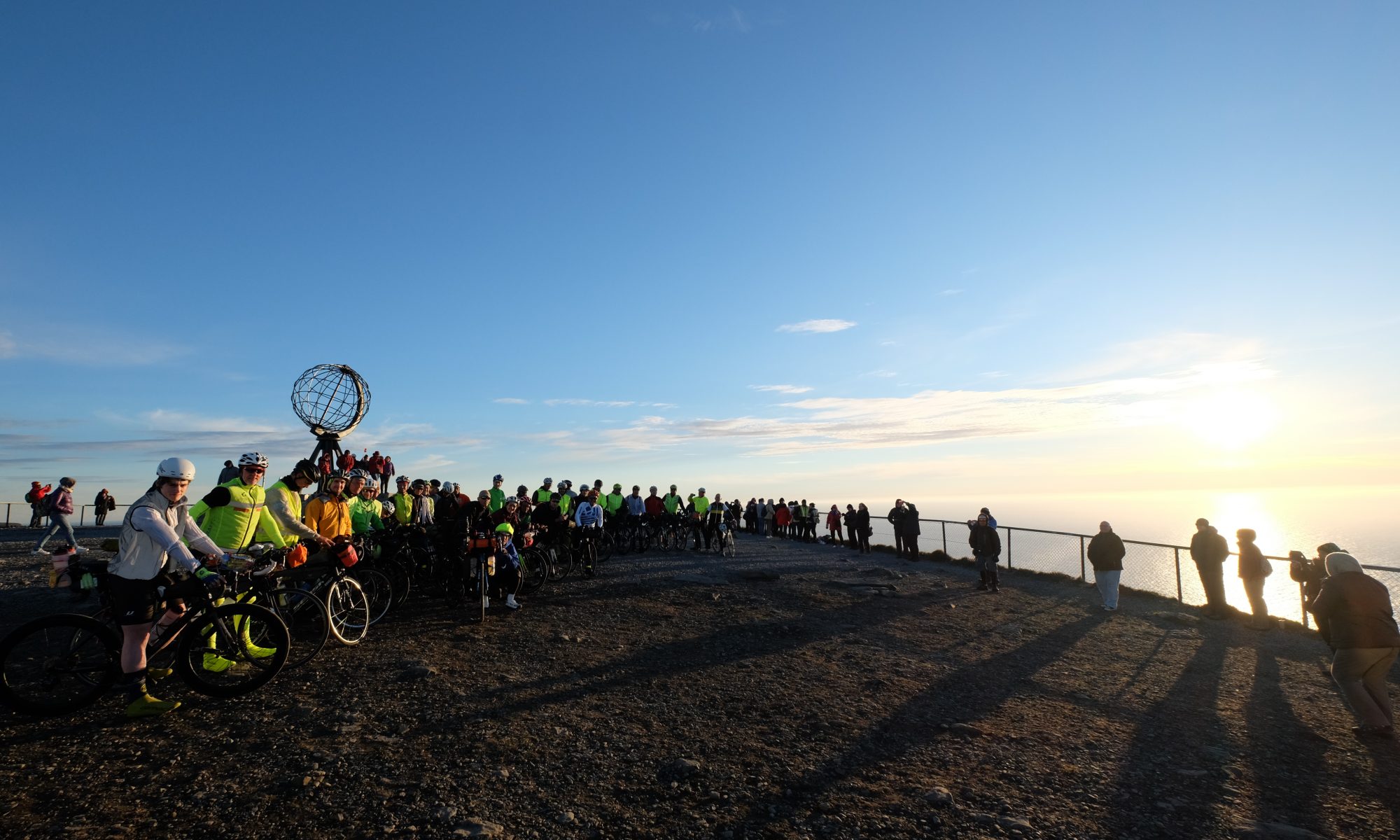
Nine days ago, the silence of the North Cape was broken by the sound of 75 cyclists clipping into their pedals at 00:01. Riders from around the world set off under the Midnight Sun, each carrying the same dream – but with their own personal journey ahead.
Nine days later, NorthCape-Tarifa 2026 has already delivered everything that makes this adventure so unique.
The Arctic landscapes of Norway gave way to the endless forests and lakes of Finland. Riders experienced 24-hour daylight before gradually returning to normal nights as they travelled south through Estonia, Latvia, Lithuania and Poland. Yesterday, race leader Florian crossed into Germany, the ninth country of this incredible journey, and passed the halfway point of the 7,400-kilometre route near the Czech-German border.
Along the way, riders have battled cold rain, warm sunshine, relentless headwinds, welcome tailwinds, mosquitoes, mechanical problems, fatigue and sleep deprivation. Every day has brought new challenges – and new stories.
The first checkpoint in Helsinki – around 1,700 km from the start and already longer than many ultra-distance races – has now been left well behind. The front of the race continues to captivate, with Florian maintaining an impressive pace while Ralph and Jens continue their determined pursuit. After more than 3,700 kilometres, however, the race is far from decided. Every hour brings new dynamics, and there is still a very long road to Tarifa.
But NorthCape-Tarifa has never been only about the leaders.
Throughout the field, every rider is fighting a different battle. Some are chasing ambitious finishing goals, while others are simply determined to keep moving south, one pedal stroke at a time. Friendships are forming on the road, strangers are helping each other, and every kilometre creates another unforgettable memory.
One of the great additions to this year’s event has been the daily commentary by Marco Milesi, who has been following the race closely on NorthCape-Tarifa.com. His race analyses and insights have added another dimension to the daily blogs, bringing the action to life for everyone following the riders from home.
From the Arctic Circle to Germany, the first nine days have already been packed with adventure, determination and unforgettable moments. Yet, with more than half of the route still ahead for most riders, the real challenges are only just beginning. The Alps, southern Europe and, ultimately, Tarifa are still waiting.
Congratulations to every rider still out there. Whether you’re racing for the podium or simply chasing your own dream, you’re all writing a story that will stay with you for a lifetime.
Ride safe, enjoy every kilometre, and thank you for inspiring us all.
🌍 Follow the dots, read the daily blogs and Marco’s commentary, and continue sharing this incredible adventure with us!
On June 20th at 00:01, 75 riders from 30 countries around the world rolled away from the North Cape and began their epic journey south beneath the midnight sun. Of those, 61 riders have set their sights on the ultimate finish line in Tarifa, taking on the full 7,500 km adventure across Europe.
From the midnight sun of the Arctic to the windswept shores of Tarifa, riders will cross multiple countries, cultures, and landscapes in one of the world’s greatest self-supported cycling challenges.